
Exterior insulation
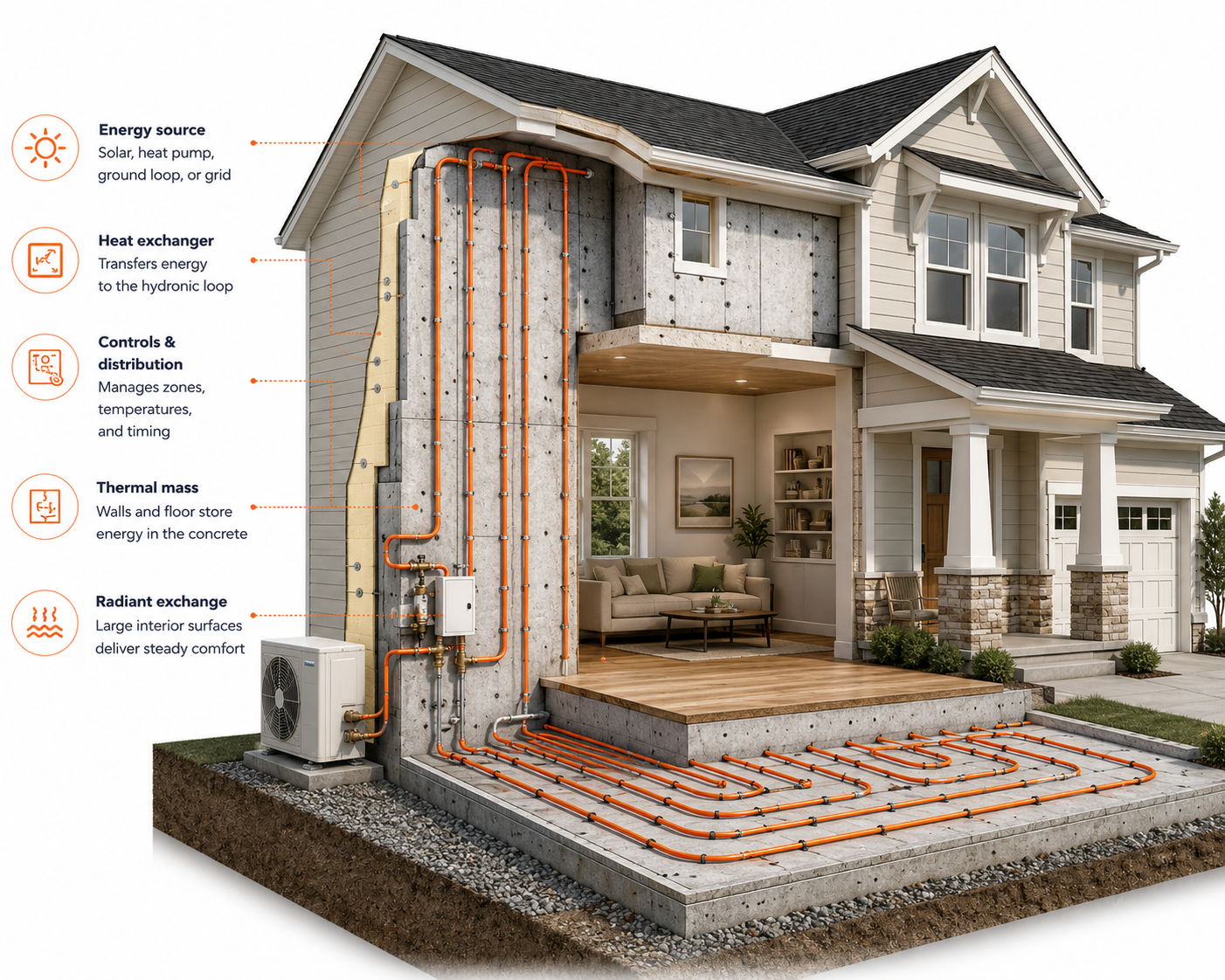
Insulation is placed on the outside to retain energy in the thermal mass.
THE BIG IDEA
Water carries energy into tubing embedded in the concrete walls and floor. The structure stores that energy and gradually exchanges it with the room. Exterior-only insulation keeps the concrete connected to the interior while limiting energy loss.
01 · WHAT TWT PHYSICALLY IS
Insulation is placed on the outside to retain energy in the thermal mass.

Walls and floor store energy across a vast, accessible surface.
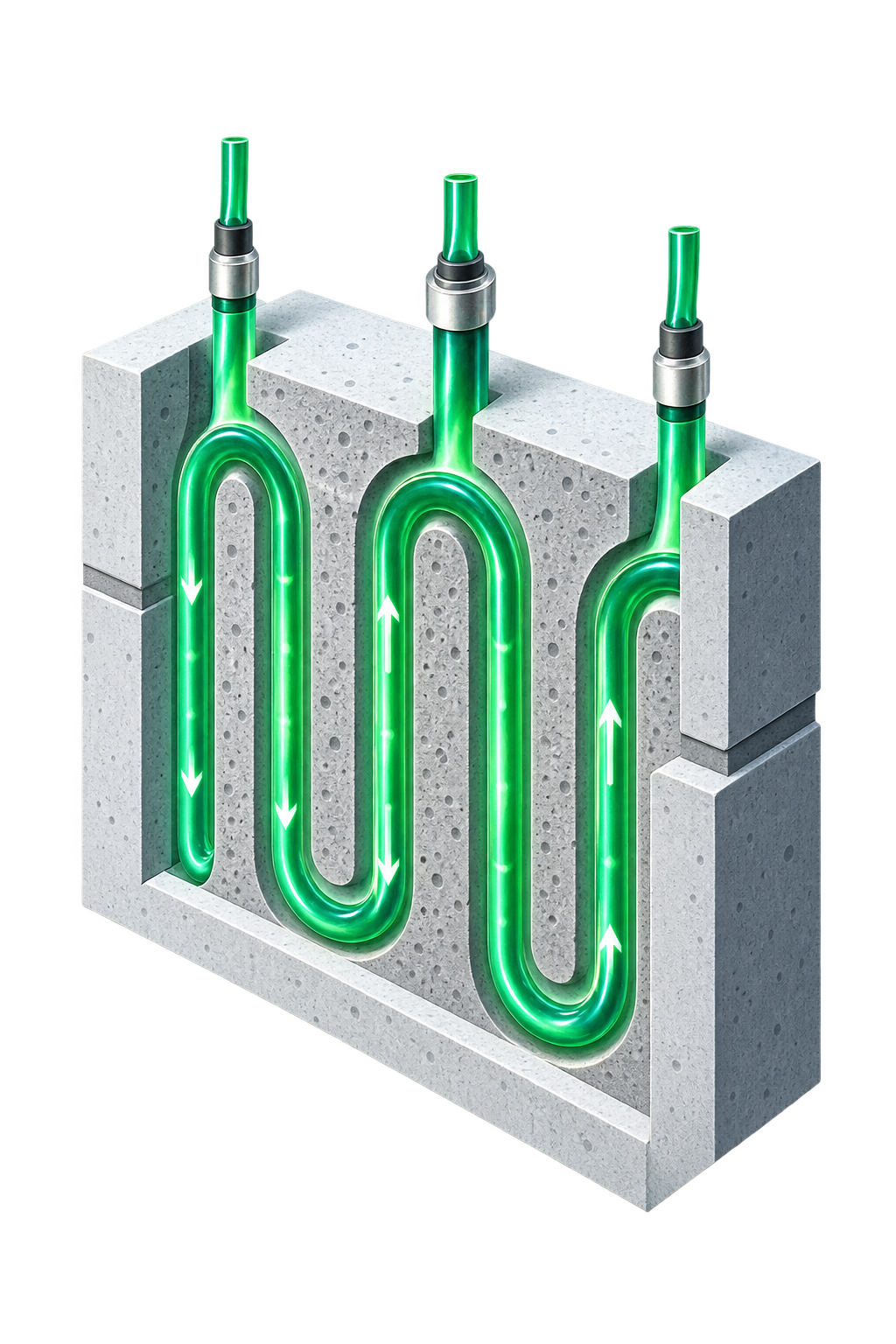
Tubing is embedded in the concrete to charge or cool the mass efficiently.
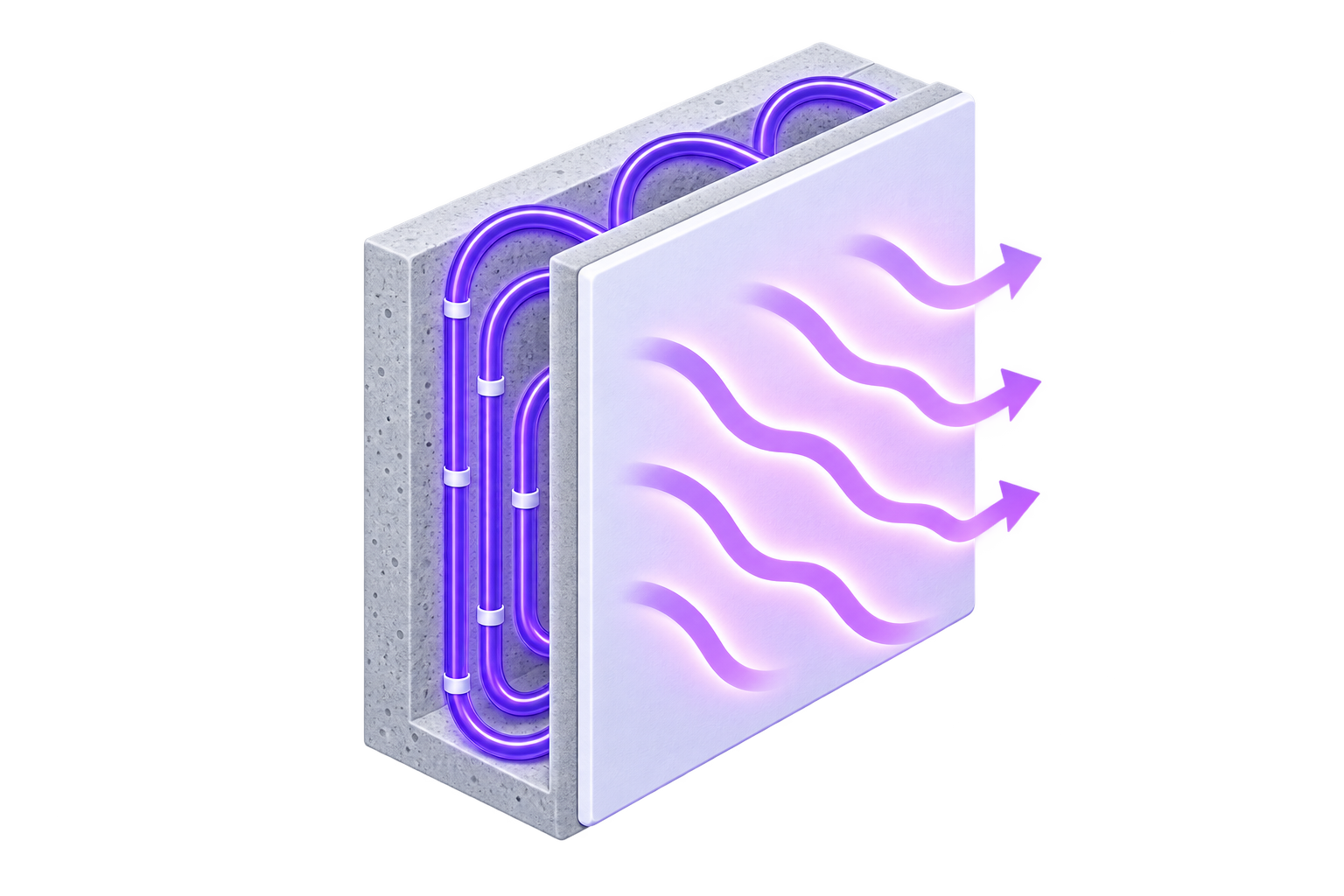
Interior surfaces naturally exchange energy with the room through radiant comfort.
02 · WHY IT WORKS
Using the entire building as the emitting and receiving surface, TWT can operate at lower water temperatures while delivering the same comfort.
See surface-area detailTraditional systems
Small surface. Higher temperature.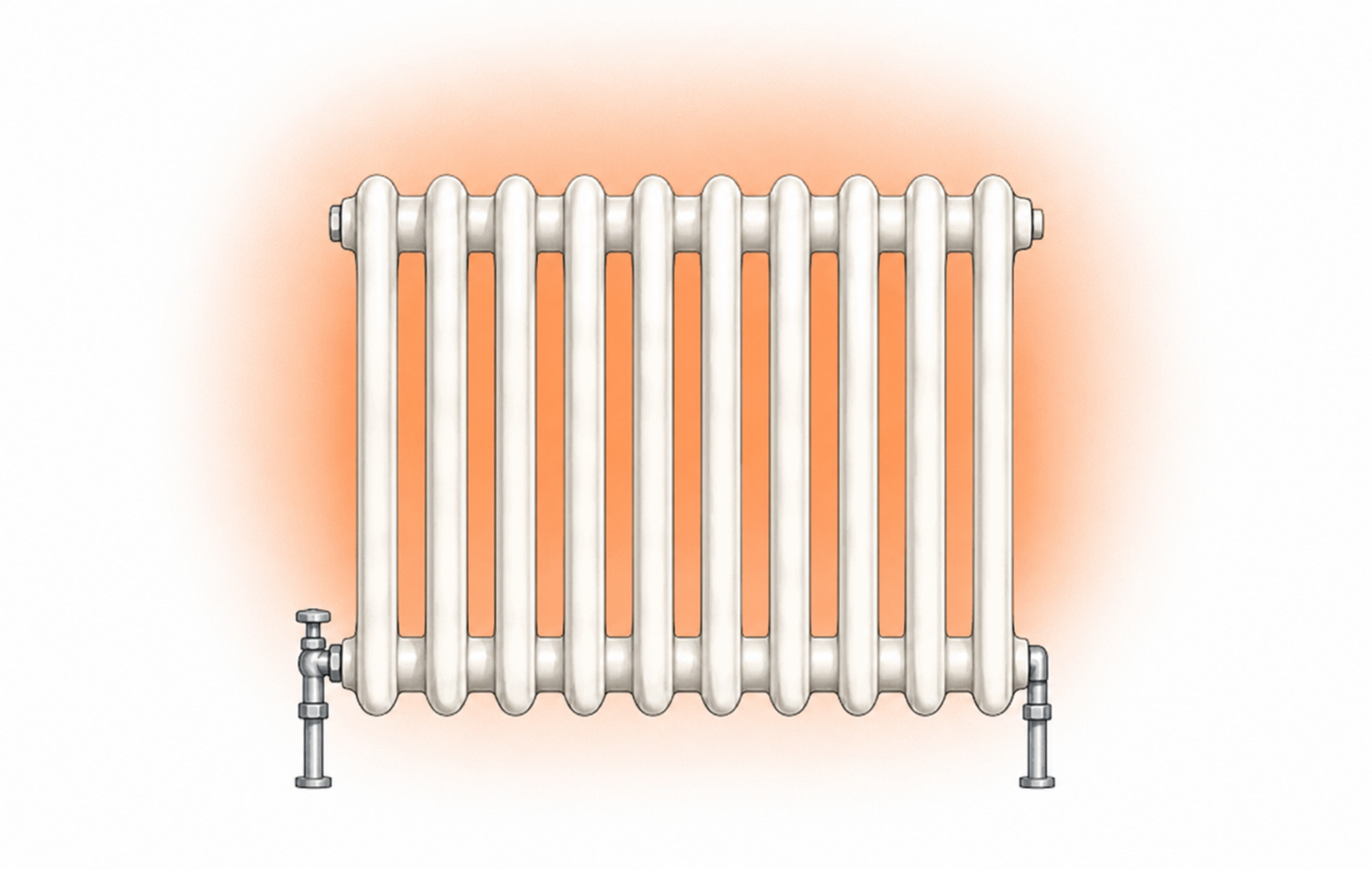 110–120°FTypical emitter temperature
TWT walls & floor
Building-scale surface. Lower temperature.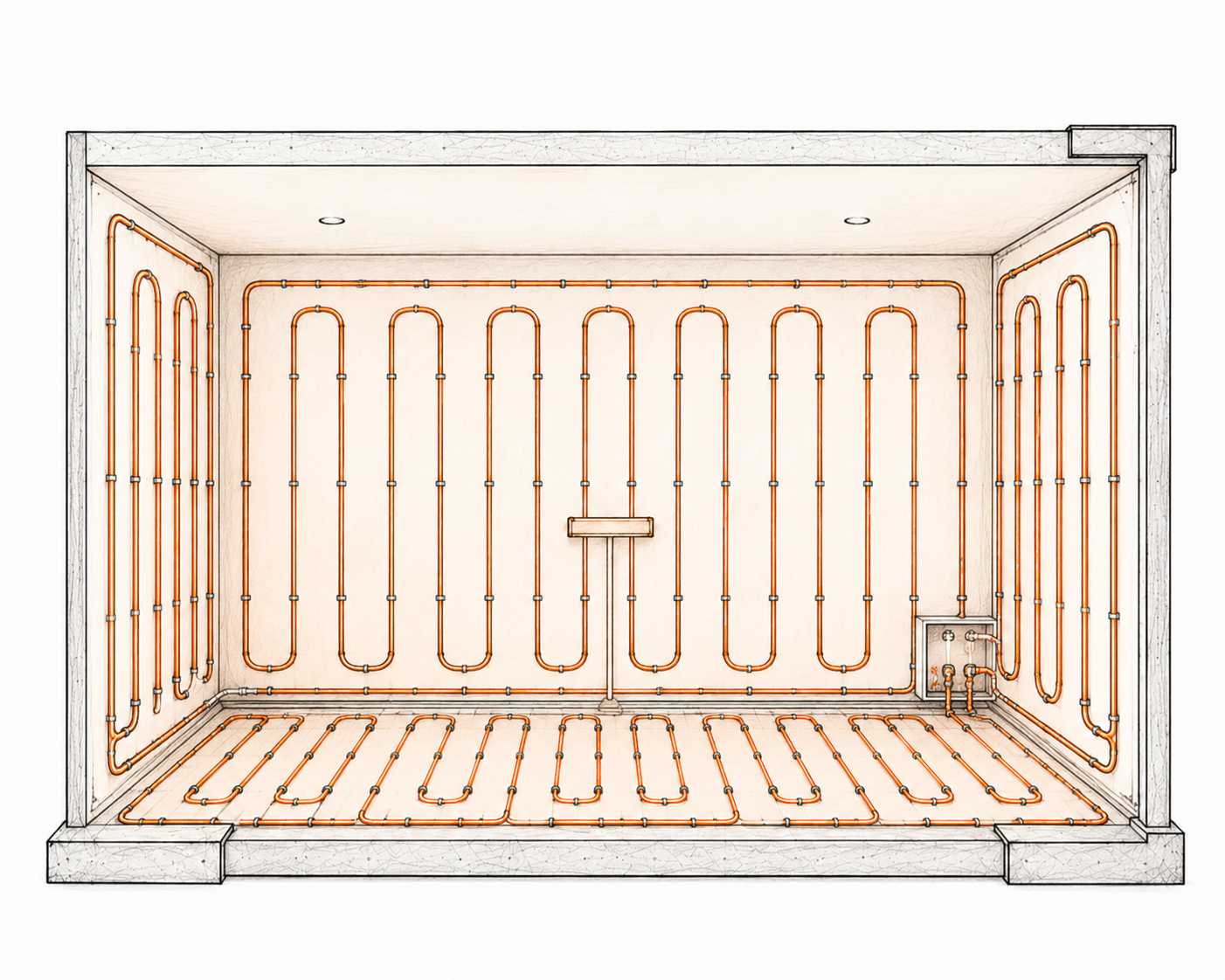 65–75°FModeled operating range
03 · HOW ENERGY MOVES
Solar, heat pump, ground loop, or grid
Controls send water where it is needed
Concrete walls and floors store energy
Exterior insulation protects the charge
Interior surfaces exchange energy slowly
04 · HOW IT WORKS THROUGH THE SEASONS
Charge the mass during off-peak periods, then release steady radiant warmth.
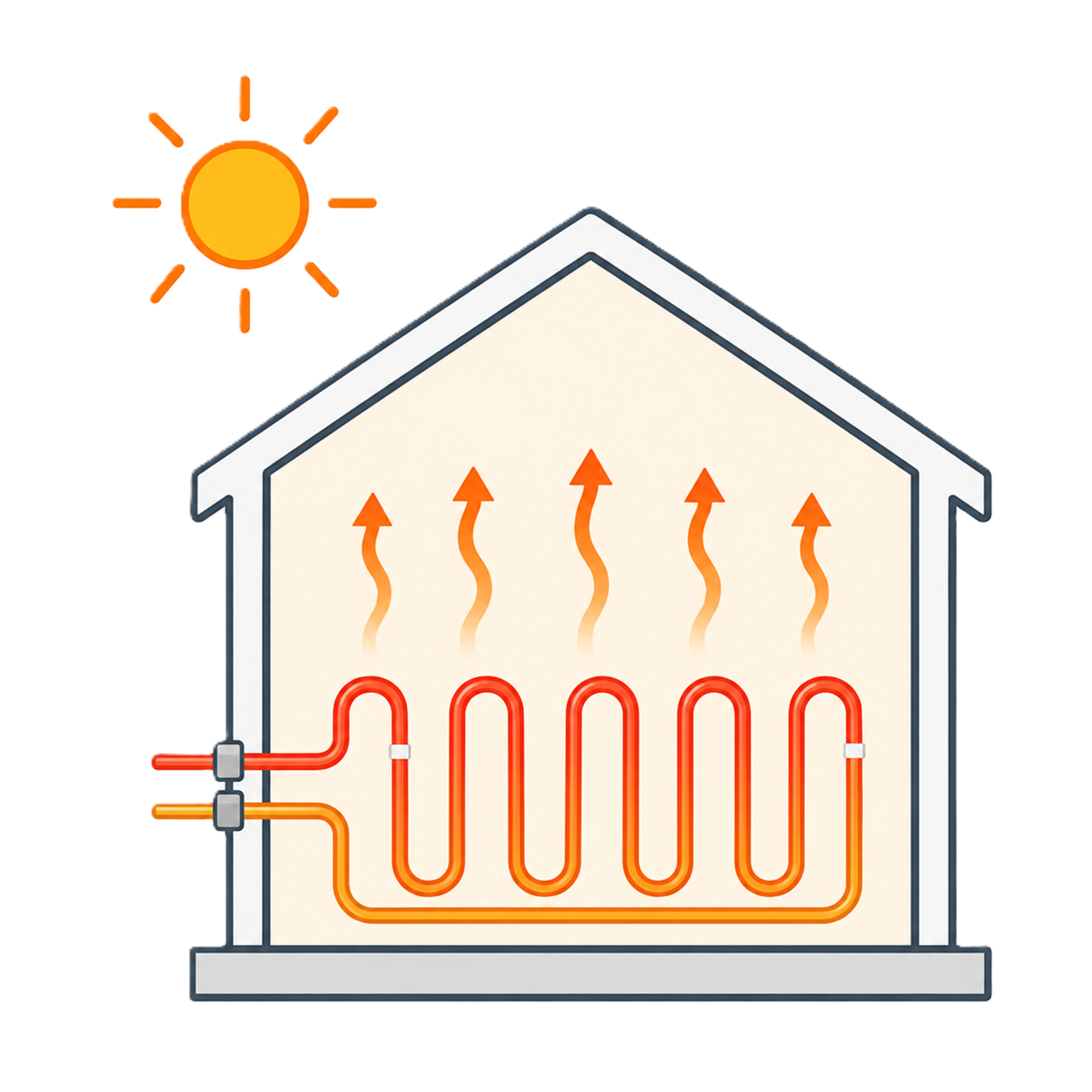
Capture solar gains in the mass and redistribute energy when it is needed.

Remove heat from the mass or reject it outside while protecting indoor comfort.
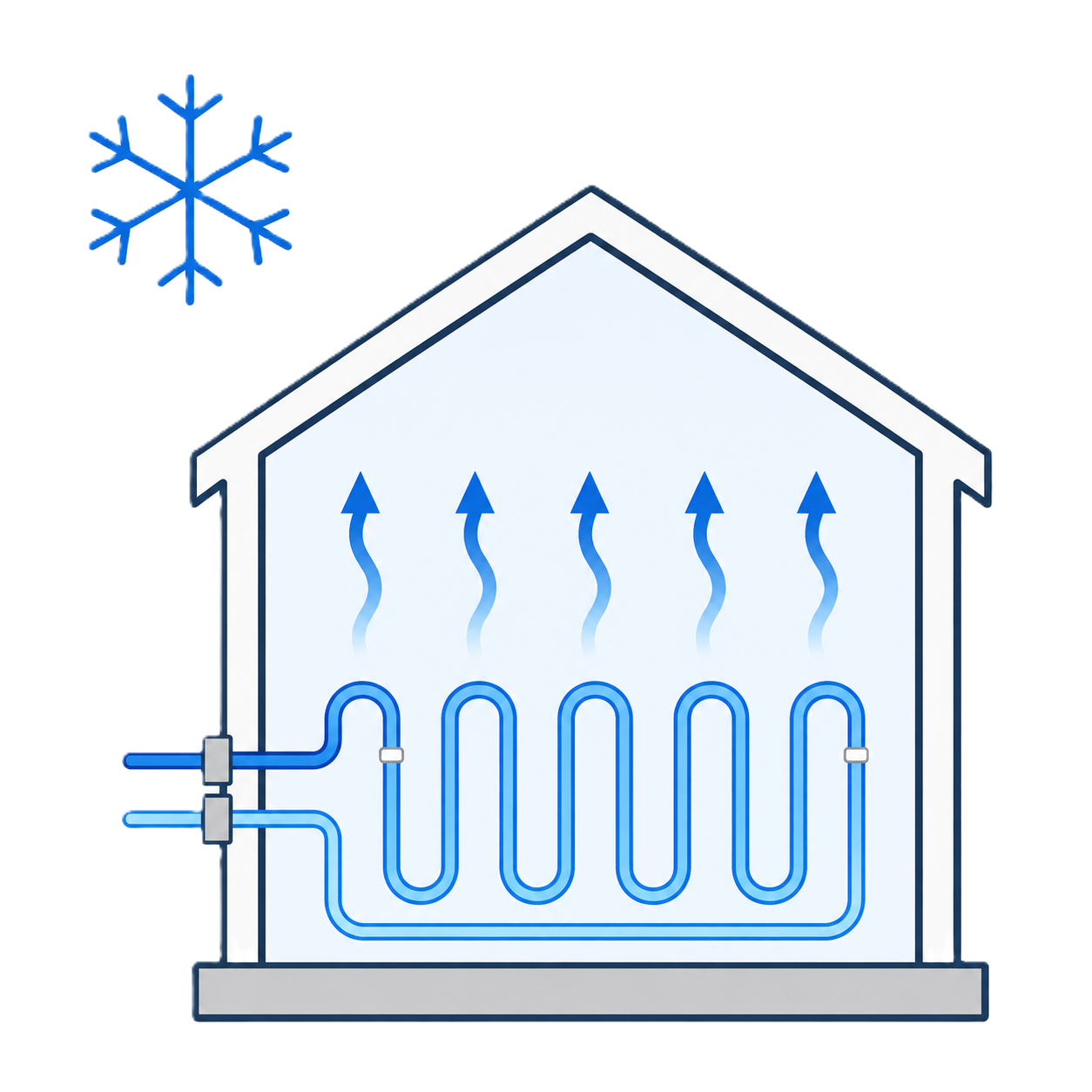
Dew-point control is integrated into cooling operation to prevent condensation and protect indoor air quality.
05 / THE FULL SYSTEM
TWT connects the energy source, heat exchanger, controls, thermal storage, and building zones into one coordinated hydronic system.
Energy can be directed where it is most useful—immediately to the building, into reserve storage, or through individually controlled zones.
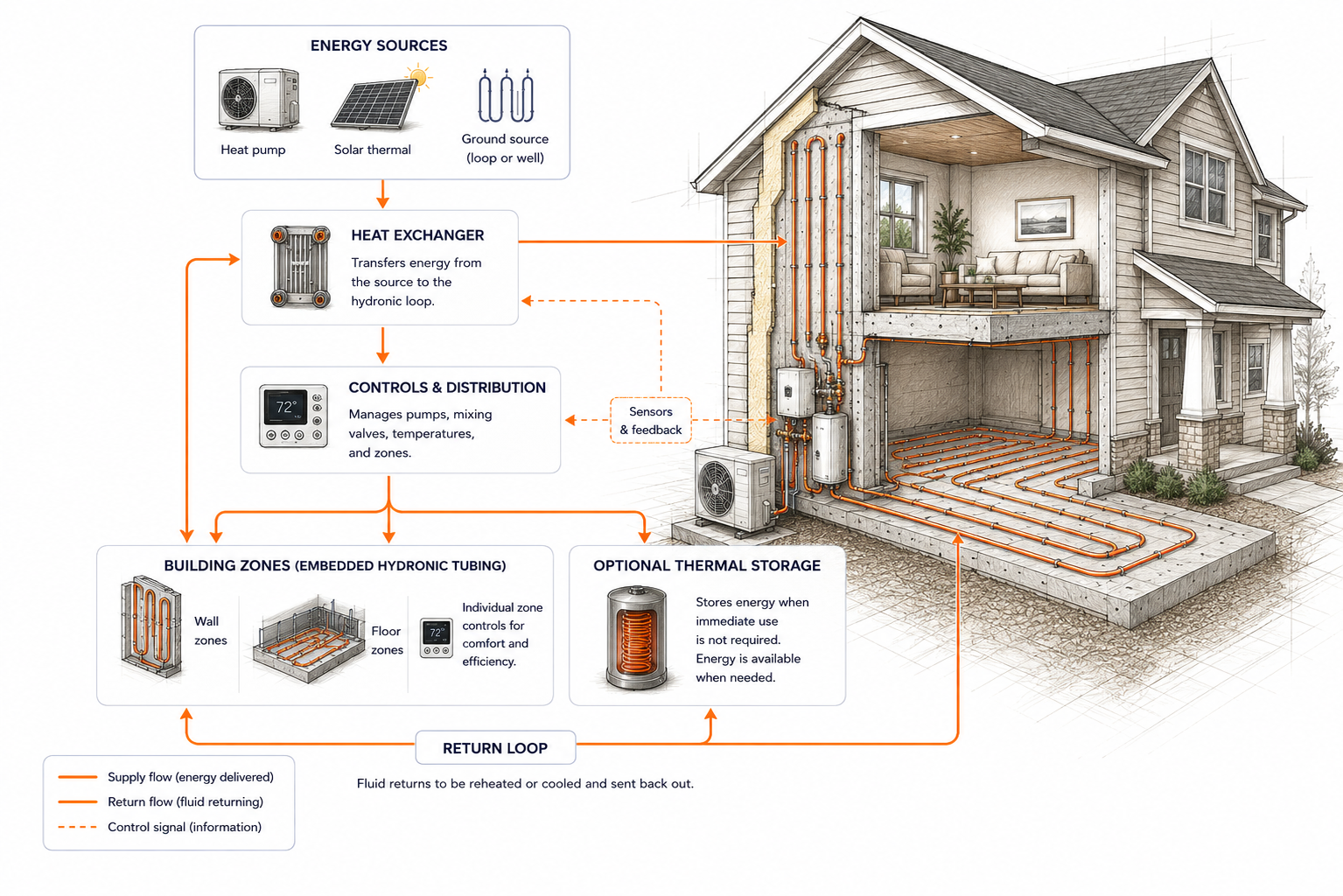
TWT is not one device added to a building.It is a coordinated hydronic system that uses the concrete structure to receive, store, distribute, and release thermal energy.
Continuous circulationA closed loop supports stable operation and efficient energy use.
Directed where it's usefulEnergy is sent to building zones or storage according to need.
Built-in stabilityThe concrete mass provides steady comfort and reduces temperature swings.
See the data behind the system.Explore the evidence, modeling, and research program.